Chinese Chicken Stock
I recently heard someone refer to green onion and ginger as the “mirepoix” of Chinese cooking. I have not been the same since.
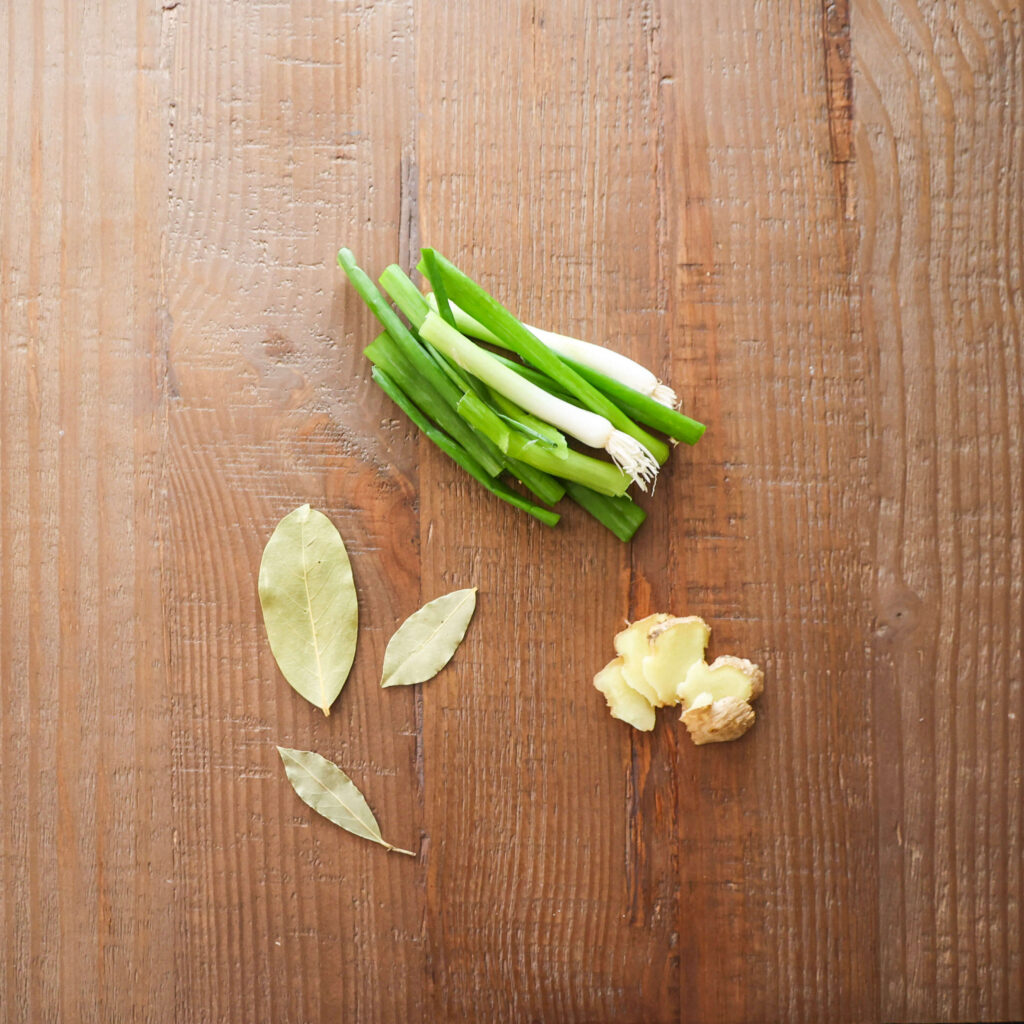
Indeed, one of the key differences between Chinese chicken stock and Western chicken stock is the former’s absence of the celery-onion-carrot mix. Instead, it uses a gentler medley of aromatics – a thumb of ginger, some green onions, perhaps a few bay leaves.
Depending on who you ask, that might even be too many ingredients. My mom, for example, uses only a few slices of ginger to flavour her stock. It is still so delicious that we’d usually drink all the stock before we could incorporate it in anything else. More about this in Epilogue, below.
To me, this chicken stock represents the very best of broths: clear, bright, and true to its core ingredients.
Table of Contents
1. Ingredients & Equipment
Ingredients
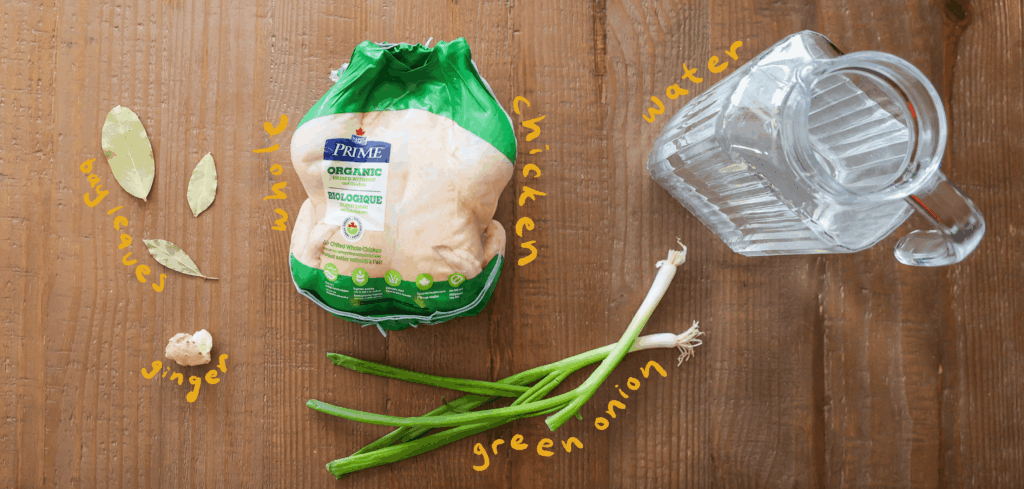
- 1 whole chicken, around 5-7 pounds
- 1 thumb ginger, sliced
- 3 green onions, halved crosswise
- 3 bay leaves
- 12-16 cups water
Equipment
- Stock pot, sub large heavy-bottomed pot
- Strainer and/or cheesecloth
2. Step-By-Step Guide
STEP 1: Butcher chicken.
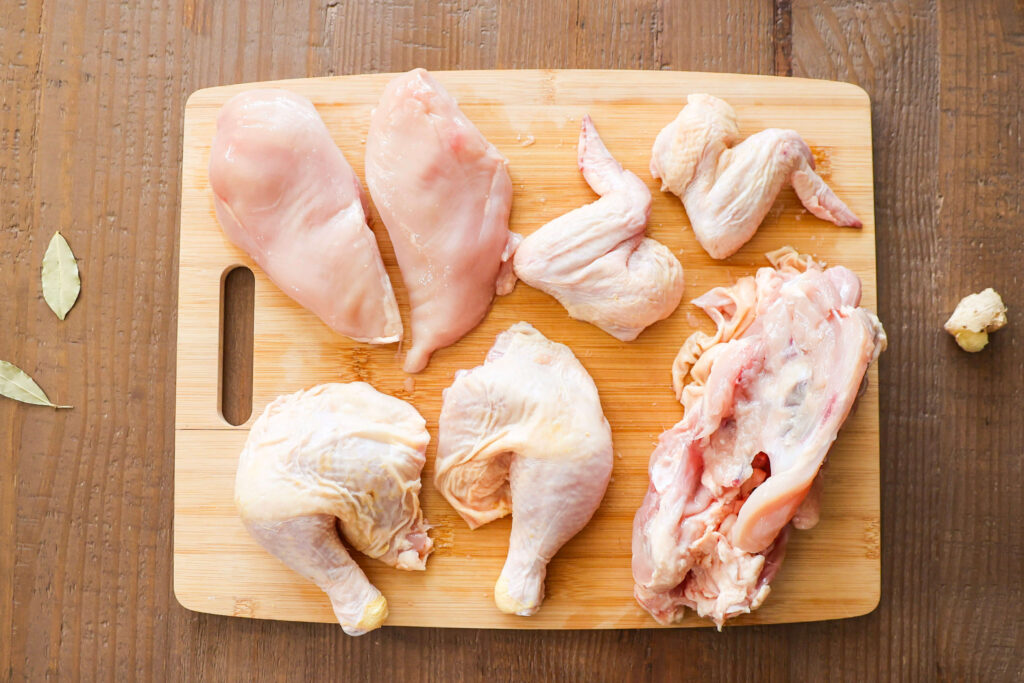
Take your whole chicken and cut along the joints to separate it into its component parts:
- 2 legs
- 2 thighs
- 2 breasts
- 2 wings
- Rack (the leftover bone structure)
STEP 2: Build stock.
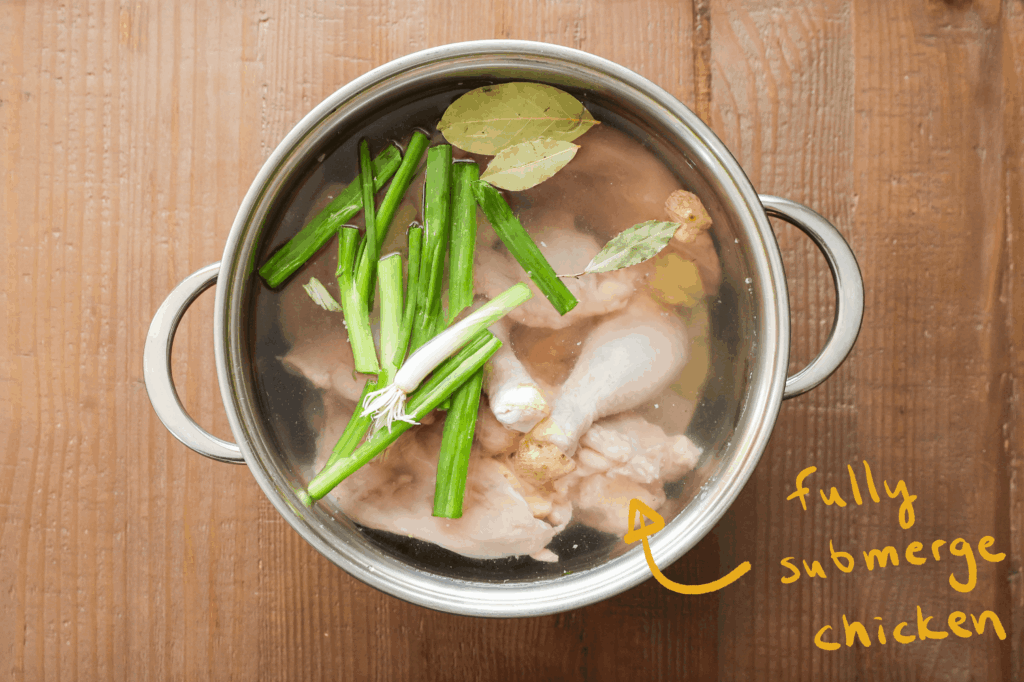
Slice ginger and cut green onions in half crosswise. To a stockpot or other large heavy-bottomed pot, add all the cut up chicken (including the rack), sliced ginger, halved green onions, bay leaves, and enough water to just fully submerge the chicken (around 12-16 cups).
STEP 3: Simmer.
Bring contents to a gentle boil, then turn heat as low as you can that can still maintain a gentle simmer. Simmer for 2 hours, skimming occasionally for impurities for the first 15 minutes.
STEP 4: Strain and enjoy!
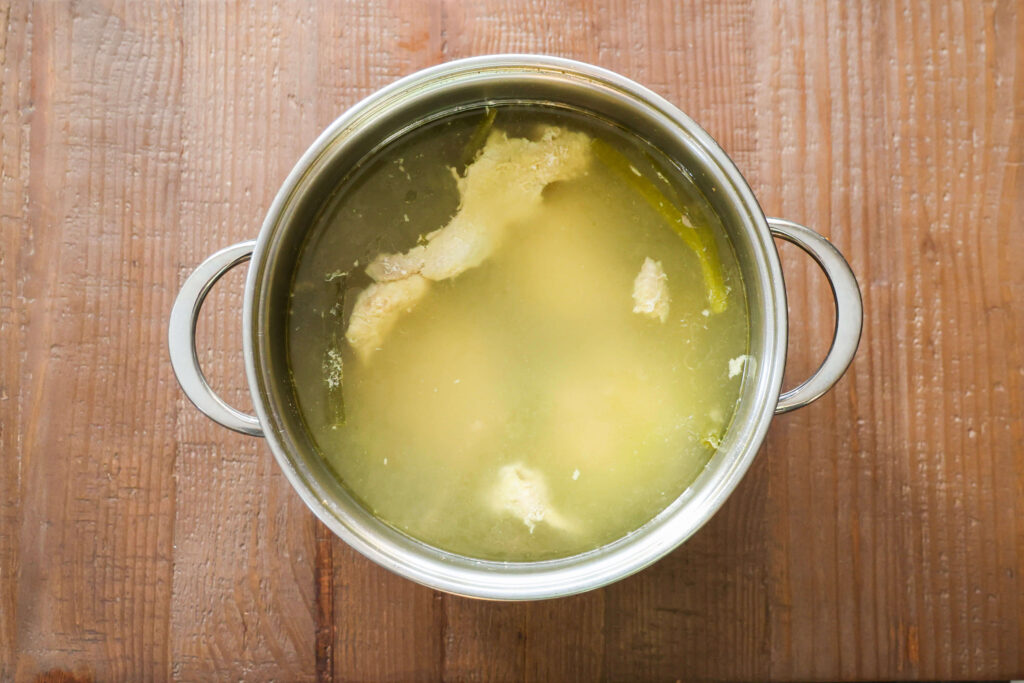
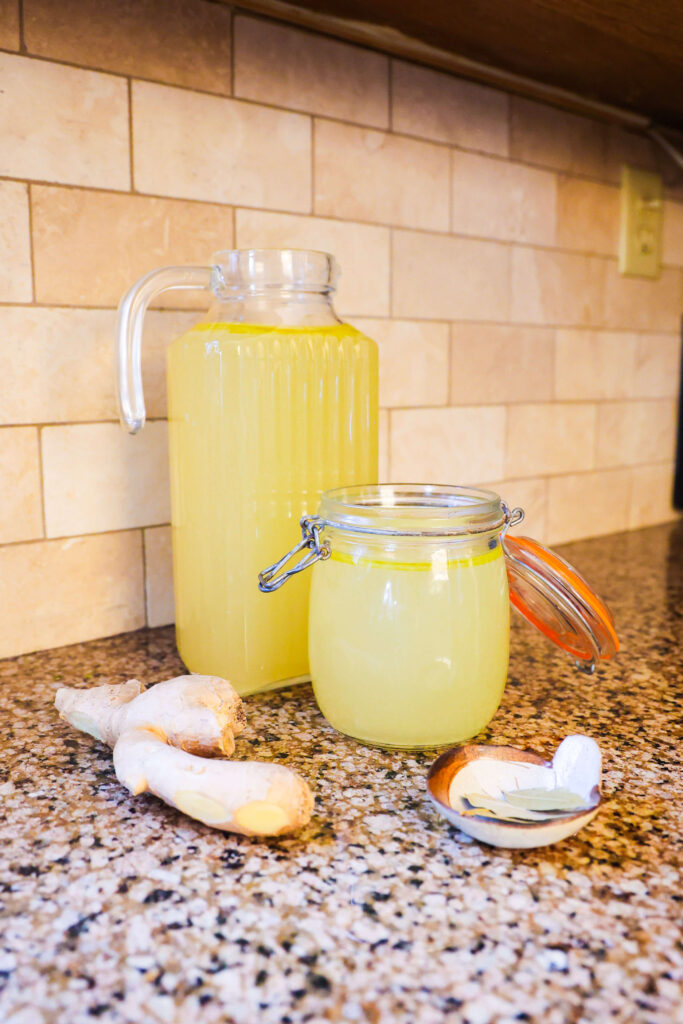
After simmering for 2 hours, turn off heat. Your stock should be clear and slightly golden.
Remove chicken and aromatics. You may want to use a large spoon for the chicken, as it will be so tender that it could fall apart at the slightest jostling. Reserve the chicken for another purpose so you don’t waste food! I don’t mind a bit of mushy chicken myself… mix it with some BBQ sauce and you’ve got the world’s easiest pulled chicken! Put that chicken between 2 toasted hamburger buns, and baby, you’ve got dinner!
Wait until the stock cools slightly – at least 30 minutes. Strain with strainer or cheesecloth. For a finer result, lay a cheesecloth over a strainer and strain stock through both.
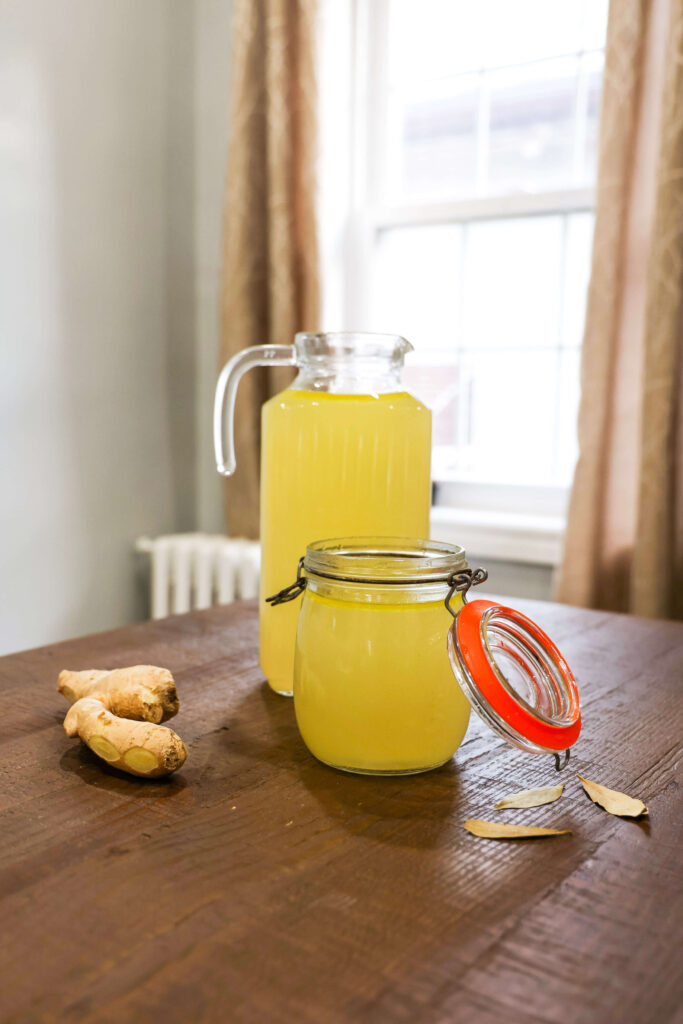
You can drink this stock on its own or use it as the base for another recipe, like hot and sour soup. If you’re not using it immediately, wait for it to cool completely, then pour into airtight glass containers and store in the fridge – though in my house, there’s rarely any left to store.
3. FAQs
Do I have to use a whole chicken?
No. You can use any combination of chicken parts, as long as they add up to at least 5 pounds. To be economical I often use chicken racks (you can find them in many Asian grocers) or chicken quarters 🙂
Should I blanch the chicken before the main simmer?
You can if you want, but I usually don’t.
Blanching means you boil water, add the chicken for 1-2 minutes, and drain and rinse the chicken. You then start with new water, the rinsed chicken, and the aromatics for the main simmer.
Blanching achieves a few things:
- It removes some blood, proteins, and other impurities that could “cloud” the stock;
- It neutralizes some of the chicken’s gamey flavour; and
- It reduces the need to skim during the simmer.
Many Chinese cooks swear by it.
I don’t do it just because:
- I don’t mind a slightly cloudy stock (I find that diligent skimming is enough) and don’t want to throw out chickeny water;
- I’ve never really noticed/been bothered by “gamey” chicken; and
- I’m lazy.
Should I add salt to the chicken stock?
I suggest not adding any salt to your stock until you use it in the final intended application. For example, if you’re using the stock to make egg drop soup, don’t add salt until the egg drop soup recipe tells you to.
Generally, with soups, you want to salt near the end of the cooking process – typically just before you serve. This is because flavours get more concentrated (read: saltier) as they cook. Also, each successive ingredient you add can have its own salt content and add to the saltiness of the soup.
How can I store chicken stock and how long can I store the stock for?
Wait for the stock to cool completely, then pour into airtight glass containers and store in the fridge. Use within 5 days if storing in fridge; 4 months if storing in freezer.
4. Recipe Card
Chinese Chicken Stock
Equipment
- 1 whole chicken around 5-7 pounds
- 1 thumb ginger slices
- 3 green onions halved crosswise
- 3 bay leaves
- 12-16 cups water
Instructions
- Butcher chicken. Separate chicken into 2 legs, 2 thighs, 2 breasts, 2 wings, and rack (leftover bones).
- Build stock. In stockpot, add all chicken pieces including the rack, sliced ginger, halved green onions, bay leaves, and enough water to just submerge chicken - around 12 cups.
- Simmer. Bring to boil then turn heat to the lowest setting possible that maintains a gentle simmer. Simmer for 2 hours, skimming occasionally for impurities in the first 15 minutes.
- Strain and enjoy! After 2 hours of simmering, stock should be clear and slightly golden. Turn off heat. Remove chicken and aromatics.1 Wait at least 30 minutes so stock cools slightly, then strain with strainer, cheesecloth, or both. Drink it on its own, use it in soups, or store it in an air-tight container in the fridge once cooled - though in my house, there’s rarely any left to store!

Notes
5. Epilogue
I’ve gotten into pouring this stock into my coffee mug and drinking it like tea. After all, it’s incredibly nutritious, makes me happy beyond belief, and is the same golden yellow as a lightly-steeped chamomile. Who would be the wiser to my strange new habit?